PARKING IN BELGRADE
Our apartments are in Sveti Sava and Makenzijeva streets, in the GREEN (third) parking zone.
More about parking in Belgrade you can find on the official website of Public Utility Company Parking Servis: https://parking-servis.co.rs/eng/
TAXI:
Beogradski Taxi 011/19801
Beotaxi 011/6438120, 011/19999, 011/19700
Beonaxis 011/3581111, 19804
Pink taxi 065/4889977, 011/19803, 0800 119803
Žuti taxi 011/3283050, 011/19802
Where to go and what to see in Belgrade?
The Temple of Saint Sava in Belgrade
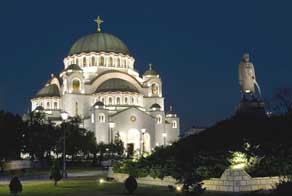
The Temple of Saint Sava is an Orthodox church which is dedicated to Saint Sava, founder of the Serbian Orthodox Church. It is built on the location where his remains were burned by Ottoman Turks in 1595.
Saint Sava was the son of Stefan Nemanja, grand župan of Serbia. As a young boy, he has longed for spiritual life, so he has run away to the Holy Mount Athos, where he entered an order and died as a monk.
From the emperor and the patriarch, Sava has obtained independence of the Serbian Church, and he has become the first Serbian archbishop. Together with his father, Sava has raised up the Chilandar Monastery, and, later on, many other monasteries, churches and schools all over Serbia. Sava has reconciled his brothers, fighting about power, Serbs with their neighbours, and, through creation of the Serbian Church, he has created Serbian state and culture. He has brought peace to all Balkan peoples and worked for the well-being of them all, which has brought him respect and affection of all those nations. To the Serbs he has given a Christian soul.
St. Sava died in Trnovo on January 12, 1236. Serbian king Vladislav has transferred Sava's remains to the Mileševa monastery, but the Turkish Sinan Pasha took the remains and burned them in Vračar, Belgrade, on April 27, 1595.
Preparations for the construction of one of the largest orthodox churches in the world started way back in 1894. After two public competitions, the design authored by architects Bogdan Nestorović and Aleksandar Deroko was approved in 1926. Construction works were interrupted with the bombing of Belgrade at the beginning of World War II. They were continued after a very long pause, in 1985.
Belgrade Fortress - Kalemegdan Park
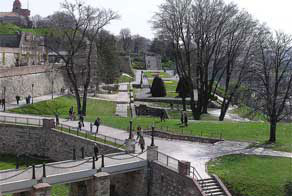
With impressive views over the Danube and Sava rivers, the Belgrade Fortress and the Kalemegdan Park together represent a cultural monument of exceptional importance, the area where various sport, cultural and arts events take place, and are fun and joy for all generations of Belgraders and numerous visitors of the city.
The Belgrade Fortress was erected on the hill above the junction of the Sava and Danube rivers at the end of the 1st Century as the permanent camp of the Roman Legion Flavia Felix. During the course of history, it underwent various additions, was razed to the ground, rebuilt and remodelled on numerous occasions.
Knez Mihailova Street
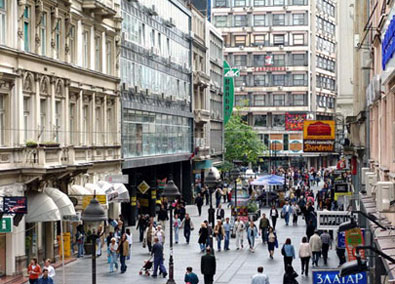
This the main pedestrian zone is under state protection as one of the oldest and most valuable architectural monuments containing a series of representative buildings and private houses built in the late 1880's.
Republic Square
The Square is a popular place for the young Belgrade’s to meet before going elsewhere to have fun. Actually, even those who do not know Belgrade very well, prefer the Square as an orientation point.
The Old Bohemian Quarter of Belgrade
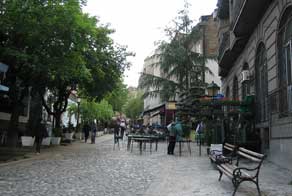
The old bohemian quarter of Belgrade dates back to late 19th and early 20th century. It was back then when its kafane (taverns and restaurants) were a meeting place for many of the greatest figures of the cultural scene of the period. It is often compared with the Montmartre in Paris, both for its appearance and the cheerful, vigorous artists' atmosphere. |
 english